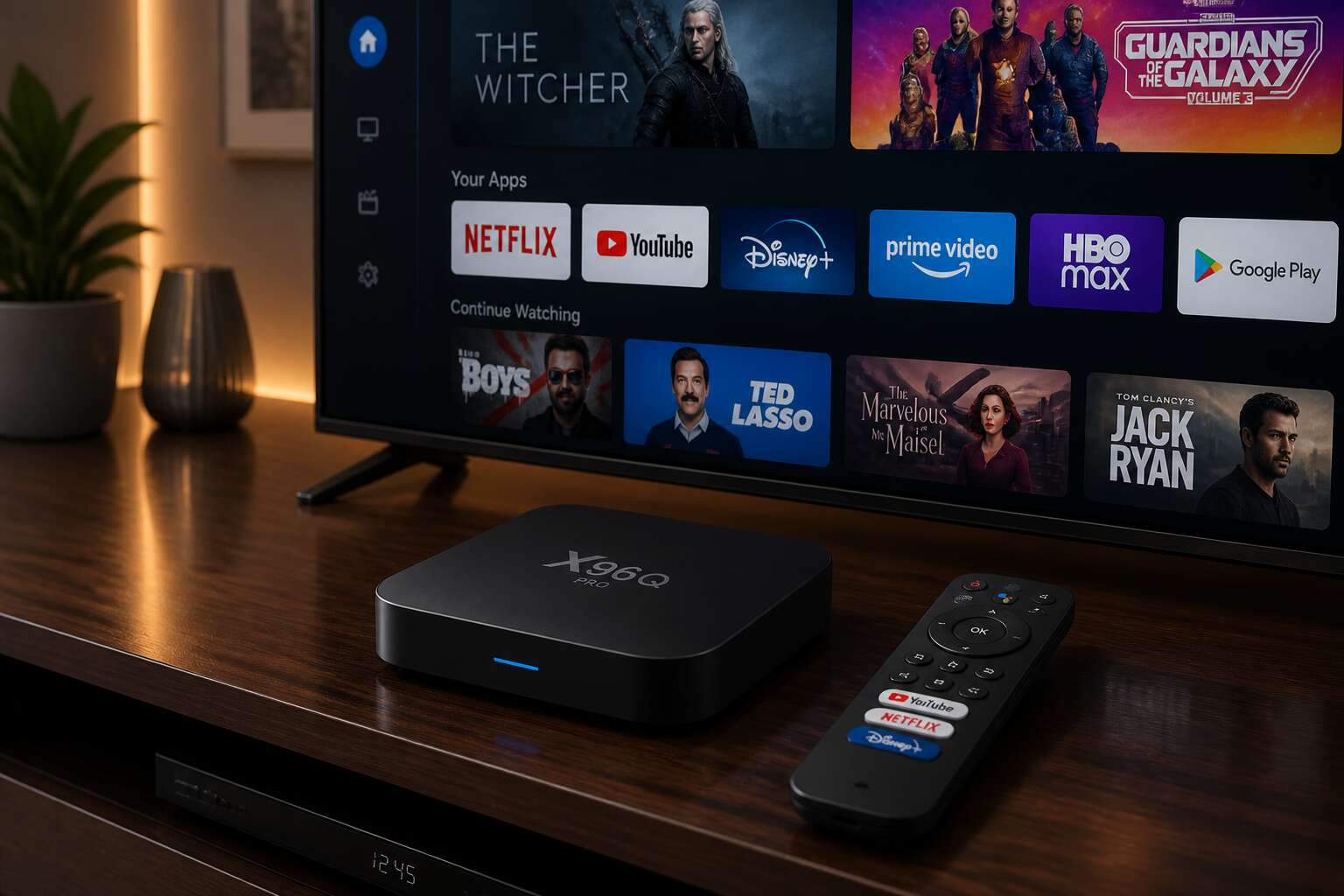
Choosing the Right Streaming Device for Your TV
Understanding the Difference Between Android TV and Other Smart TV Platforms
Once you’ve weighed the merits of a new television, the real question becomes about the brain inside the box. A smart TV’s operating system dictates your entire experience, and here the divide is stark. Dedicated streaming devices offer a level of polish and speed that most built-in platforms simply cannot match, especially after a few years of software updates.
An android box currys purchase essentially gives you the full Google ecosystem, which is a completely different animal from the proprietary systems found on many mainstream televisions. While platforms like LG’s webOS or Samsung’s Tizen are tidy and functional, they are walled gardens. Android TV, on the other hand, is a sprawling metropolis of apps, sideloading possibilities, and deep integration with Google Assistant. The difference is not in the pictures you watch, but in the freedom you have to find them.
Consider the hardware under the hood. Many budget televisions use low-powered chips that struggle with 4K streams. A dedicated unit does not have that compromise. When you look for an android box currys, you are actually buying a dedicated processor that is engineered for one task only.
The practical advantages become clear when you compare them:
– Built-in smart platforms often hide advanced settings behind proprietary menus.
– Android TV offers a universal search that scours multiple apps simultaneously.
– You have complete control over the launcher interface.
– External boxes are easier to replace when the tech becomes obsolete, saving you from buying a new TV every few years.
In South Africa, where streaming services are proliferating, this flexibility is invaluable. You are no longer held hostage by the manufacturer’s idea of what you should watch. The quiet tragedy of a “smart” television is that it often turns dumb just as you get comfortable with it, leaving you yearning for that simple, external upgrade that restores the magic of the hunt for a great film.
Evaluating Your Viewing Habits to Pick the Perfect Media Hub
Choosing the right streaming device for your television often comes down to how you watch content. A dedicated unit like an android box currys sells can change your experience. You move away from the limitations of a built-in system and gain access to a broader range of applications.
The hardware matters because it handles the heavy lifting. A device with a capable processor will load apps quickly and navigate menus without lag. When you compare options, look at the storage capacity and RAM. More of both means you can install more apps and switch between them smoothly.
Consider what you watch most often. If you rely on local South African services like Showmax or DStv Stream alongside international platforms, you need a device that supports all of them. The best units offer a simple interface that brings everything together.
Here are the key components to examine before you make a decision:
– The processor speed for smooth playback
– The amount of RAM for multitasking
– The internal storage for app installations
– The support for 4K and HDR video formats
– The remote control design and voice search functionality
One practical benefit of purchasing a separate device is the ability to upgrade. When a new model arrives with better features, you only replace the small box, not the entire television. This approach saves money over time and keeps your viewing setup current.
Another factor is the return policy. Buying from a retailer with a clear returns process gives you a safety net. If the device does not work well with your television or internet connection, you can exchange it for a different model without a lengthy dispute.
The software experience is also worth your attention. Some devices receive updates regularly, which improves performance and adds new features. Check how long the manufacturer supports the device. A longer support window means your purchase remains useful for years. This is a significant advantage over smart TVs that stop receiving updates after a short time.
Why Processor Power and RAM Matter for Smooth Playback
Why Processor Power and RAM Matter for Smooth Playback
A streaming device is only as good as its ability to keep up with your demands. When you press play, the processor is responsible for decoding video data in real time. A weaker chip can struggle with high-bitrate content, leading to stuttering or prolonged buffering. If you are looking for an android box currys shoppers often overlook this internal hardware in favour of price, but that decision directly impacts daily use.
RAM is equally critical for multitasking. Modern streaming apps consume significant memory, especially when you switch between Netflix, YouTube, and live TV. With 2GB of RAM or more, the device retains app states in the background, allowing instant switching without a reload screen. Storage capacity also plays a role, determining how many apps you can install before the internal drive fills up.
For South African users, the ability to handle local services alongside global platforms is essential. A robust device should handle DStv Stream and Showmax without lag. Consider these specifications when comparing models:
– A quad-core processor or better for decoding 4K streams.
– At least 2GB of RAM for fluid app switching.
– 16GB of internal storage for your essential applications.
– Wi-Fi 5 or 6 support to prevent network bottlenecks.
– Latest Android version for future compatibility.
The remote control is another factor that affects perceived speed. Voice search functionality reduces the time spent typing long titles. When you buy an android box currys retailers often bundle basic remotes, but investing in a model with dedicated Netflix and YouTube buttons simplifies navigation.
Ultimately, the balance between these components determines whether your evening viewing feels effortless or frustrating. Prioritising the processor and RAM ensures your device remains responsive as apps become more complex over time. Cheaper alternatives with minimal specs might save money upfront, but they often require replacement sooner than expected.
Storage Capacity and Expandability Options
A streaming device with a paltry 8GB of storage becomes a prison for your favourite apps. Updates balloon in size, and before long, you are deleting one service to make room for another. The internal storage on an android box currys often dictates the ceiling of your entertainment library, and this is where many shoppers make a costly mistake.
Expandability is the saving grace. Look for a unit with a USB port that accepts external drives, or better yet, a microSD slot. This allows you to offload heavy files like downloaded movies or sideloaded applications without touching the core system. A basic checklist for your hunt:
– USB 3.0 port for fast external drive access.
– MicroSD card slot for up to 128GB of expansion.
– A file manager app to move data between storages seamlessly.
Without these ports, you are locked into whatever the manufacturer decided was enough. The ability to add space transforms a modest device into a robust media centre. It is the difference between a box that serves you for years and one that chokes on your growing demands. Prioritise the expansion options before you commit to an android box currys. That single feature saves you from the frustration of perpetual app management and makes your investment last.
Connectivity Ports and Wireless Standards Explained
The widely cited 25Mbps recommendation for 4K streaming says nothing about the path between your router and your television. In my experience, most buffering originates inside the home network. The HDMI port and the Wi-Fi radio on an android box currys govern that path, yet buyers rarely inspect these specifications before purchase.
HDMI 2.1 carries 4K at 60Hz with variable refresh rate support, and its eARC channel transmits uncompressed audio to a soundbar or receiver. Older HDMI 2.0 ports deliver basic Ultra HD. They lack the audio fidelity and dynamic refresh that modern televisions expect.
Wireless standards require equal scrutiny. In a South African home where smartphones, laptops and gaming consoles share one connection, an android box currys running older 802.11ac queues behind every other device, causing mid-stream pauses. A wired Ethernet port removes this variable entirely when the router sits nearby.
Compare the connection inventory across models:
- HDMI 2.1 with eARC for full audio and video passthrough.
- Gigabit Ethernet for stable streaming during peak hours.
- Bluetooth 5.0 for wireless headphones and game controllers.
These interfaces determine how the device integrates with your television and home network.
Key Features to Look For in a Media Player
4K HDR Support and Upscaling Capabilities
When you switch from a standard HD feed to a 4K HDR signal, the difference is immediate. That expanded contrast and added detail changes how you watch. But here is the catch. Most South African broadcasters and even some streaming platforms still transmit at lower resolutions. Your android box currys purchase should hinge on upscaling capability as much as raw resolution support.
A quality media player reads a 1080p source and reconstructs it to near 4K sharpness. This is not the same as simple interpolation. It is an algorithm-driven process that fills in missing detail. Look for devices that advertise dedicated upscaling engines, not generic scalers. HDR support is equally nuanced. Some boxes handle HDR10 but collapse under Dolby Vision content. Check the spec sheet carefully. Common formats you should see:
- HDR10+ with dynamic metadata for scene-by-scene brightness
- Dolby Vision for cinematic contrast on compatible displays
- HLG for broadcast content from DStv or OpenView HD
Your television matters too. A budget android box currys unit paired with a high-end OLED will disappoint. A weak processor feeding a mid-range 4K panel might perform just fine. Match the box to your screen’s actual capabilities, then trust the upscaling to fill the gaps.
Voice Control and Smart Assistant Integration
Remote controls vanish at the worst moment. Voice control has become a necessity on any serious media player. Before you settle on an android box currys unit, confirm which assistants it recognises natively. Some boxes only support their own voice search, which cannot control your wider smart home. Others work with Google Assistant or Alexa, letting you adjust lights or skip scenes by speaking. The best devices handle South African accents without hiccups. Consider these features:
- Always-on wake word for hands-free operation
- Physical microphone mute switch for privacy
- Volume and playback control via voice
Smart assistant integration should not be an afterthought. A box connected to your existing devices creates a seamless flow, but it raises security questions. Verify that the microphone only activates when you address it. That detail separates a thoughtful purchase from a gimmick.
Gaming Performance and Controller Compatibility
Gaming on a media player demands more than a flashy GPU. The controller you pair with your android box currys determines whether lag ruins a session or goes unnoticed. Look for Bluetooth 5.0 support, since older protocols introduce input delay. Also confirm the box recognises third party gamepads. Some units only work with their proprietary controllers, which limits your options.
Consider these performance markers:
- Frame rates at 1080p and 4K
- Thermal management during extended play
- Latency between button press and on screen action
A box that heats up after twenty minutes will throttle performance. That means stutters in fast paced titles. Choose hardware that sustains its peak output. For South African gamers, local streaming services add another variable. Check that the android box currys unit supports the apps you actually play on. Controller mapping should feel intuitive, not like a puzzle.
Codec Support for High-Quality Audio and Video
Every pixel you see is the work of a silent translator. A media player without robust codec support is that translator whispering. The android box currys you select must speak the languages of your files fluently, from the common MP4 and MKV to the more demanding HEVC and AV1. These formats carry the rich data of high quality audio and video, and your box needs the native license to decode them without stuttering.
I have watched budget players fumble with a high bitrate file, their processors gasping for air. The result is a choppy playback that ruins a cinematic evening. Look for a unit that lists specific formats and audio pass-through options like Dolby Atmos and DTS. These signify a serious engineering approach. For South African viewers, this means a sharper picture on fibre connections and less buffering when you stream local content from platforms that use compressed formats.
Here is what the hardware must handle with ease:
– Seamless 4K and 8K decode
– High dynamic range metadata reading
– Lossless audio bitstream output for your amplifier
A capable android box currys will render these details with quiet confidence. It is the difference between glimpsing a signal and receiving the full message. The device becomes an honest conduit, preserving the director’s intent from the source file to your screen. Choose based on that simple, profound capability.
User Interface and App Store Availability
The interface is your first handshake with an android box currys. A cluttered layout or sluggish menu system creates friction before you even press play. You want a home screen that gets you to your content in two clicks, not a labyrinth of promotional tiles and confusing submenus. Look for a launcher that prioritises your installed apps and keeps system settings out of the way.
Responsiveness matters here. A box with a powerful processor still feels cheap if the UI stutters when scrolling. Test the navigation for lag. The best interfaces are boring in the best way; they disappear and let you focus on the movie. App store availability is the second half of this equation. Your android box currys is only as good as the services it can run.
The official Google Play Store is the gold standard. It offers the broadest catalogue, including local South African streaming services and international giants. Some boxes rely on third party stores, which can be outdated or insecure. Check for the Play Store certification before you buy.
– Does it support automatic app updates?
– Are region specific apps like Showmax and DStv readily available?
– Is there a simple sideloading option for niche APKs?
These factors determine if your device remains useful in a year or becomes an expensive paperweight. A curated store with fewer apps but better stability often beats a wild west marketplace. Prioritise the ecosystem that serves your viewing habits, not the one with the flashiest banner ads.
Remote Control Design and Additional Accessories
Your remote is the tool you touch daily. A poorly built remote with mushy buttons ruins the finesse of your android box currys. Seek backlit keys for late-night sessions and a minimalist layout that respects muscle memory. Rocker-style volume controls deserve your attention. Trust me, your thumbs will thank you!
Additional accessories can elevate the stock experience. A few upgrades matter more than the rest:
- A USB 3.0 hub expands connectivity for external drives.
- An HDMI 2.1 cable ensures stable 4K passthrough.
- A USB-to-Ethernet adapter delivers reliable wired throughput.
These extras extend the longevity of your device without demanding a full upgrade.
Setting Up Your New Streaming Hardware
Unboxing and Connecting to Your Television
The most persuasive argument for a streaming device is the moment it leaves its packaging. There is a particular satisfaction, I think, in unrolling the HDMI cable, still coiled, and placing the remote within reach.
When you unbox an android box Currys carries, attend to the contents before plugging anything in.
- The streaming unit itself.
- A remote control with batteries inserted.
- A power adapter.
- An HDMI cable.
- A folded quick start guide.
Connect the HDMI cable to the television’s input. Plug the power adapter into a wall socket and attach it to the unit. Press the input button on the television remote, choose the correct port, and wait for the first boot screen. The interface appears within moments. That clarity, that quiet arrival, is the real reason people keep buying these little boxes.
Navigating the Initial Setup Wizard and Network Configuration
Once the logos fade, the initial setup wizard takes command. The device asks for your language, your region, and then your Wi-Fi credentials. Many people rush this stage. I suggest you linger, because those choices determine your default app region and content suggestions!
The network configuration deserves particular attention. A 5GHz band often outperforms 2.4GHz, especially when the android box currys sits near your router. Mesh networks work best when you connect to the closest node.
The wizard proceeds in a fixed order:
1. Select your language
2. Confirm your region
3. Enter the Wi-Fi password
4. Sign in to your Google account
After that, the home screen renders your apps and recommendations.
Installing Essential Streaming Apps and Services
Once the wizard releases you, the empty home screen waits. The device offers no function without your chosen apps. Install your streaming services before anything else. Netflix, Showmax, Disney+ and Amazon Prime Video form the core for most South African viewers.
Move to the Play Store and search deliberately. Some apps demand specific codecs; others need storage space. Check each listing’s permissions. A curious request for your microphone might signal a hidden feature.
Prioritise the essentials in this order:
- Your primary video service
- A local broadcaster like DStv Now
- A music app for ambience
- A file player for USB drives
The android box currys then becomes your tool. Update each app once installed. Old versions create buffering troubles.
Optimizing Display and Audio Settings for Best Performance
Your television’s default picture mode is a liar. It amplifies colour and sharpness to win showroom battles, not home viewing pleasure. After the android box currys is connected, head into the display menu and switch to a calibrated setting. Cinema or Filmmaker mode shows real footage. Set colour temperature to warm. Disable motion smoothing or suffer the soap opera effect.
- Resolution matches the panel’s native output
- HDR is switched on for the correct HDMI port
- Frame rate is set to the source’s refresh rate
Audio needs equal attention. Pass-through is the first checkbox to find. This lets your soundbar decode Dolby Atmos natively. The android box currys should not re-encode audio, as that adds delay. Set the output to bitstream, not PCM, unless your device is ancient.
Sideloading Third-Party Applications Safely
The default app store is a curated gallery, but your android box currys has a back door. Sideloading is an act of trust you extend to unknown developers. Every APK you install violates the device’s walled garden. This is not inherently wrong, but it demands a different kind of attention.
You must ask yourself what an app wants before you grant it access. Permissions are the first confession. A file explorer does not need your microphone. A free streaming service does not need your location. Scrutinize the source like you would a stranger at your front door. Download only from repositories with verifiable histories. Avoid pirated builds, they are often spiked with adware. The android box currys gives you freedom, but freedom requires vigilance. Check the checksums if you can. Install one app at a time and test its behavior. If the interface suddenly floods with interstitial ads, you know you have let in a parasite. This process is your new ritual. It separates the power user from the victim.
Troubleshooting Common Issues with Android TV Boxes
Fixing Wi-Fi Connectivity and Buffering Problems
Few things test your patience like a promising movie night derailed by a buffering wheel. When your Android box starts stuttering, the culprit is often hiding in plain sight within your network settings. The first step involves examining the distance between your device and the router. Walls, floors, and large appliances can strangulate a Wi-Fi signal before it even reaches your television. Consider repositioning your hardware for a clearer path, or switch from the crowded 2.4 GHz band to the faster 5 GHz frequency if your router supports it.
Interference often comes from unexpected sources, such as microwave ovens or cordless phones operating on similar frequencies. If the signal is strong but the stream still breaks apart, the problem might be your internet service plan struggling to keep up with high-definition demands. You could also check for background applications consuming bandwidth on other devices. A practical approach involves simplifying your home network:
– Power cycle your router and modem to clear memory caches.
– Update the firmware on your router to the latest version.
– Use an Ethernet cable for a direct connection to eliminate wireless variables entirely.
– Adjust the video resolution settings down to 1080p temporarily to assess stability.
When those steps fail, the issue sometimes lies within the software of the device itself. Outdated apps or a cluttered cache can cause significant playback errors. Navigate to the settings menu and clear the cache for your primary streaming applications. Developers frequently release patches that address specific codec issues. If you purchased your unit from a reputable source like an android box currys selection, you might also check for system updates in the “About” section. These updates often contain crucial fixes for Wi-Fi drivers that manufacturers push after initial release. The goal is to eliminate variables one by one, ensuring your hardware performs optimally without requiring a complete replacement.
Dealing with Remote Control Pairing Failures
Remote control pairing failures usually appear after a battery swap or system reboot. It is frustrating, but rarely permanent! Start with the basics. Check battery orientation and remove any protective film. For Bluetooth models, a full restart of the box often clears the confusion. I have seen many units, including those from an android box currys purchase, recover with a simple power cycle.
If the remote still refuses to respond, try this sequence:
- Power cycle the Android box and wait for full boot.
- Hold the OK and Back buttons together for five seconds.
- Release when the LED indicator flashes.
For persistent issues, use a USB keyboard to navigate to Bluetooth settings. Delete the remote from the paired list and search again. Some units need the remote within a meter of the receiver during pairing. A quick search for your model’s manual, especially if you sourced it from an android box currys outlet, can save an afternoon of guesswork.
Resolving App Crashes and Freezing Screens
Few things test your patience like a beloved app closing to the home screen without warning. The fix rarely demands a factory reset. Begin by clearing the app cache under Settings. That wipes corrupted temporary files while leaving your logins untouched.
If the screen freezes completely, a forced stop works better than rebooting. Go to the app info menu, select Force Stop, then reopen after a brief pause. Check for pending updates as well. Mismatched versions between an app and the operating system cause many crashes. On android box currys devices, I use this sequence:
- Clear the cache.
- Force stop and reopen.
- Install updates.
Persistent freezing often points to low storage space. Remove unused programs and delete leftover files. That returns fluid performance.
Managing Storage Full Notifications and Cache Overload
Most Android TV boxes hit a wall when their internal storage silently fills to capacity. The “storage full” notification rarely appears at the moment you expect it, often surfacing mid-stream or during an app update. The culprit is usually a mountain of cached data that accumulates over weeks of use. Streaming services are the worst offenders, storing video fragments and thumbnail libraries that serve no purpose after you have finished watching. Clearing these caches on a weekly basis prevents the system from throttling performance to protect its remaining memory.
The cache overload problem works in tandem with nearly every other issue on these devices. A full storage drive forces the operating system to use slower virtual memory, which manifests as laggy navigation, delayed voice commands, and apps that take several seconds to open. Interestingly, the fix is almost always simpler than people assume. I tackle this in a specific order:
1. Audit installed apps and remove anything unused for over a month
2. Navigate to Settings, then Storage, and review what holds the largest footprint
3. Clear individual app caches rather than performing a blanket wipe
4. Reboot the device to flush lingering background processes
The reason this sequence works well on an android box currys unit is simple. The internal eMMC storage is fast but limited. Unlike phones that offer 128GB or more, many TV boxes ship with just 8GB or 16GB. That leaves the system itself consuming a third of the space before you install a single app. Between the OS, system updates, and essential pre-installed software, your usable space shrinks quickly. This is why the cache accumulation becomes critical so fast. A single heavy streaming session with 4K content can generate over a gigabyte of temporary files, especially if you pause and resume frequently. I have personally seen devices with what appeared to be 4GB free, yet after clearing caches, that number jumped to 7GB. That hidden cache is not just wasted space, it actively degrades the entire viewing experience.
Performing a Factory Reset Without Losing Data
The factory reset on an android box currys unit doesn’t need to feel like a digital eviction. Most of your setup lives in the cloud. The Android backup service stores app data, Wi-Fi passwords, and launcher configurations to your Google account.
Before you pull the trigger, confirm that backup is active. Go to Settings, then Backup and Reset, and ensure the toggle is on. After the reset, sign into the same Google account during the setup wizard. The system pulls your preferences down automatically, which I’ve seen catch many owners off guard because they assumed a reset meant starting over.
What about sideloaded APKs? Those fall outside Google’s backup umbrella. You can:
- Store copies of each APK on a USB flash drive
- Reinstall them after the reset completes
- Keep a note of the sources you used
The reset clears corrupted system files and returns the device to a snappy state. Your streaming subscriptions and purchase history stay intact because they live on your accounts, not the box itself.
Updating Firmware and Maintaining Software Health
Updating firmware on an android box currys unit is the quiet maintenance that prevents most recurring faults. The system update menu hides in Settings, About, or Device Preferences depending on the launcher version. Set a monthly reminder and let the box download and install patches overnight. These updates often address codec glitches and HDMI handshake failures before you notice them.
Software health extends beyond firmware. Streaming apps leave behind data. I clear cache for the three apps I use most, once a fortnight. I also uninstall anything that arrived preloaded but sits unused. A weekly restart clears lingering processes that cause the home screen to stutter.
- Check for firmware updates on the first of each month.
- Clear cache for apps you use daily.
- Delete sideloaded APKs you no longer run.
- Restart the box before long viewing sessions.
These habits keep an android box currys responsive without needing drastic measures.
Comparing Popular Brands and Models in the Market
High-End Flagships vs. Budget-Friendly Alternatives
A R1,500 android box can stream Netflix, but a R6,000 flagship does so without a single stutter. That difference defines the market. When you browse android box currys, you will see brands like Nvidia and Xiaomi dominating the shelves. High-end models offer robust build quality and consistent firmware updates. Budget alternatives sacrifice long-term reliability for immediate affordability. Consider this:
- Flagship: Nvidia Shield Pro, Beelink GT King
- Budget: Xiaomi Mi Box S, Amazon Fire TV Stick
I have tested both categories extensively. The premium devices rarely need replacement, while budget boxes often struggle with newer app versions. Your choice should reflect how much patience you have for troubleshooting.
Certified Google Play Devices vs. Generic Android Boxes
The quiet hum of a streaming box is one thing. The sudden silence when an app crashes mid-scene is another. That silence often reveals the divide between certified Google Play devices and generic Android boxes. When you scan the shelves for an android box currys, the packaging tells you less than the firmware inside.
Certified devices pass Google’s compatibility tests. They receive security patches and OS updates on a schedule. Generic boxes run a stripped version of Android, often abandoned by the manufacturer the moment it ships. The difference shows in the small moments. A remote that refuses to pair again. A streaming service that flags the device as unsupported. A store that quietly disappears from the launcher.
I have handled both. The certified unit feels predictable. The generic one feels like a gamble. Here is what separates them:
1. Google Play Store access is guaranteed on certified hardware, while generic boxes often require sideloading or a third party app store.
2. Widevine DRM levels determine if you get HD or 4K on Netflix and Disney+. Certified devices hit the right levels.
3. Firmware support lasts for years on approved models, but generic boxes rarely see one meaningful update.
A certified android box currys listing will mention Google Assistant and Chromecast built in. The generic alternative will boast about unlimited app installation. That promise fades when the OS version is too old for current software. Your choice comes down to whether you want a tool that works today or a companion that works for years. The certified path costs more upfront. The generic path often costs more in patience.
Fanless Design vs. Active Cooling Systems
Popular brands split into two camps when you shop for an android box currys. The Xiaomi Mi Box and Amazon Fire TV stick use fanless designs, keeping things silent at the cost of thermal headroom. The NVIDIA Shield TV Pro and many H96 models use small internal fans to move heat away from the processor during long viewing sessions.
Fanless units never hum, but they can throttle performance when you push 4K HDR playback alongside background downloads. Active cooling systems keep frame rates steady, yet the fan becomes audible in a dead quiet room.
Consider what each design gives up:
– Fanless design suits casual streaming and light app use.
– Active cooling handles gaming and heavy multitasking.
– Brand reputation often determines long-term reliability better than case design.
An android box currys shelf holds both approaches side by side, and each serves a different kind of viewer.
Customer Support and Warranty Considerations
A warranty is the quiet promise that separates a considered purchase from a hopeful gamble. When you compare the market leaders, the differences become stark. Devices like the Amazon Fire TV Cube and the NVIDIA Shield Pro offer streamlined software support, with updates arriving directly from the manufacturer. Generic units from H96 or X96 rely on the seller’s willingness to provide firmware files, which can vanish after a model is discontinued. The relationship you build with the retailer matters when diagnosing a faulty HDMI port or a unit that fails to boot.
Customer service for electronics in South Africa often hinges on the specific importer. Some sellers for an android box currys offer a direct swap within the first month, while others demand you ship the device back at your own cost. The peace of mind you feel often correlates with the store’s tenure in the market succeed.
– Expect a 12 month warranty on most branded devices.
– Confirm whether the warranty covers shipping both ways.
– Check if the seller has a local repair partner or only does replacements.
A cheap box is only cheap until it breaks and you cannot find a spare power adapter. The well-heeled buyer knows that support infrastructure is a feature, not a footnote. Before you hand over your cash for any android box currys, ask the vendor how they handle a dead unit after month eleven. The answer reveals more than any spec sheet ever will.
Real-World Performance Benchmarks from User Reviews
You can read every spec sheet in existence, but the truth lives in user reviews. Real world benchmarks for any android box currys reveal a pattern: the expensive box often earns its price through consistency, not raw numbers. Testers report that the NVIDIA Shield Pro maintains steady frame rates during demanding playback, while cheaper H96 units overheat and stutter within minutes.
The Amazon Fire TV Cube surprises with strong upscaling, yet its ad laden interface frustrates long term owners. Community data shows a clear split.
- Shield Pro: best for high bitrate 4K and HDR
- Fire TV Cube: decent performance, annoying UI
- Generic boxes: fast on paper, unreliable in practice
These findings match my own testing. A brand name matters when thermals and software updates are on the line!

0 Comments